Monday, November 5, 2018

Writing a guidebook - a typical day

How does one write a guidebook?

OK, I haven't actually written a guidebook yet but I can describe what it's like to do the background work. In order to write a guide to walking in Tuscany, one should first collect a lot of information about that subject, a task that I approached with great enthusiasm! Most of the writing will come later but I'm now quite familiar with what a typical day of information gathering looks like. I'll call it "field work".


Breakfast

I stayed in an AirB&B apartment which was much cheaper than a hotel and had a lot more space, a private entrance, a kitchen, and a deck. It was important for me to be able to cook because not only was it economical, it was a lot faster and allowed me to get more work done. Fortunately, I enjoy grocery shopping and cooking.

November 3rd started as usual with coffee made in this little gem of a mocha machine.

Morning friend

One of my favourite breakfasts in Italy is gorgonzola cheese and jam on toasted whole grain bread. Hearty bread is uncommon in the Italian diet but supermarkets have have this excellent 100 percent whole grain bread from Germany.  


The weekly market

November 3rd was a Saturday, so I couldn't miss the fresh vendors in the main square only 5 minutes away from my apartment. Greve has a history of settlement going back to pre-Roman times (Etruscan) and their outdoor market is over 1000 years old. I bought a couple porcini mushrooms, some more gorgonzola cheese and a few slices of "porchetta" off the whole roasted pig. These three premium items are not very expensive considering their quality and are better than anything comparable at home. I got a photo of the nice man who sold me the gorgonzola and porchetta.

A free taste of porchetta before buying


Plan, pack, and go

I made a sort of sandwich using leftover focaccia and sausage. My plan was to take a bus north and walk back to Greve on country roads and trails. Unfortunately, the bus that was supposed to come according to the schedule posted at the bus stop didn't show up. Part of writing this guidebook is giving advice on how to get around so I need to solve this bus puzzle. I thought the posted schedule was the most reliable but maybe the schedule had been changed at the beginning of November and the ones posted at bus stops weren't updated yet.

Focaccia with onions ("focaccia alle cipolle), sausage, and mustard

Make plan "B"

On Saturday afternoon, I found a route that didn't require a bus trip and found the route shown below. It's pieced together from a variety of segments ranging from drivable roads to trails that are impassible to vehicles. The countryside has a lot of old tracks that are great for walking but not well-travelled or even shown on maps so a lot of my route-finding is by trial-and-error among many possibilities. This route worked out well for a plan B and I documented it with a GPS track and many photos. 

An 8.5 km loop walk from Greve in Chianti

Why it's not a holiday

A day of guidebook field work might look like a holiday but I'm more organized and persistent. It's not enough to simply find a route and go for a walk. For a suggested walk, I want to find a logical route and record any challenges so that I can suggest the route to readers with helpful instructions. The countryside I'm exploring is a maze of old roads, foot trails, and paths through vineyards and olive groves. Sometimes there are dead ends at locked gates or fences and I have to backtrack to find an appropriate route. I will have walked most of my suggested routes two or three times - often in both directions.

View of Montefioralle from my lunch stop. Olives in the foreground and highest point in Chianti in the distance. 

Dirt track on edge of vineyard, vague path by house, quiet country road


Saturday, November 3, 2018

A coincidence of rainbows

Last week I went on this walk in the Chianti hills.

Blue line, a 15 km loop from Greve including Verrazzano

After several hours, I stopped at the Castello di Verrazzano, a winery with a bar and restaurant, to see if I could get a coffee. A server in the restaurant made me one but wouldn't accept payment, perhaps because I looked like I really needed it. I got some of my photo postcards out of my pack and gave her a few. One was this one below, about which I could say "Questa è la mia città (This is my city). "Oh", she said, "un arcobaleno", which is how I learned the Italian word for rainbow.

A rainbow over Williams Lake

Servers at the Verrazzano restaurant bar

I enjoyed my coffee, said "arrivederci" and continued my walk, umbrella in one hand and camera in the other. Seven minutes after taking that photo of the servers, I got the photo below from the terraced hillside of the Verrazzano estate. A coincidence of rainbows thanks to friendly strangers and serendipity!

Un arcobaleno over the Chianti hills


Thursday, November 1, 2018

Greve in Chianti

This town used to be simply "Greve"

So why is it now officially called "Greve in Chianti"? It has to do with history and the business of naming wine. It turns out that Chianti is not simply a geographic area.  Historically, the name applied only to a few municipalities that were part of the ancient "Florentine Military League of Chianti". More recently, wine regulations were changed so that Greve and other municipalities  officially were included into Chianti which meant that they can produce "Chianti Classico" wine and use the black rooster symbol. Greve was officially renamed "Greve in Chianti" in 1972 after the change in wine regulations. They're very serious about their history and their wine here but people aren't fussy about the name. It's commonly referred to as "Greve".  

The "gallo nero" or black rooster is a popular emblem all over Chianti

I'm glad my home town isn't called "Williams Lake in the Cariboo". 


I'm writing a guidebook

When my wife and I first came to the hills of Chianti, we came with a guidebook that sounded perfect for us - "Walking and Eating in Tuscany and Umbria". We had some problems with it though so I developed a system for finding walking routes on my own (described in a previous blogpost https://iberianpixels.blogspot.com/2015/11/our-customized-walks-in-tuscany.html). On our third walking holiday to this beautiful town, I half-jokingly said to her "I should come back here and write a guidebook". Six months later, here I am! This will be the guidebook that I wish I could have bought more than a decade ago when we first came here. 

The walks we go on aren't particularly special - country roads, trails in the woods, lovely views. It's not wild country but rather a diverse cultivated landscape that's been inhabited and used in the same ways for thousands of years. In a couple of hours we can walk by vineyards, olive groves, wineries, managed forests, and vegetable gardens, sometimes on the same roads that were in use before the Roman Empire. The feelings of history and human geography are strong but what's most special about walking in this countryside is simply that we're in Tuscany before, during and after each walk. There's nothing like stimulating our appetites when we're in a place with such good food! 


Working up an appetite near Greve

Saturday market in Greve
On walking days, we eat anything we want!

Monday, June 19, 2017

Stuffed Pizza

Inspiration while travelling

One of the things that a first-time traveller to Italy soon learns is that their "bars" are quite different from "bars" in North America. If you want coffee or a snack in Italy, you go to a bar, and yes they also sell drinks. Behind the counter in a bar in Sicily I saw a large piece of pizza that had been folded over on itself like a soft taco, creating an inviting, ready-to-go meal. This inspired the thought that it would be interesting to make a pizza with a crust on the top as well as the bottom. Similar things like calzone have been around for centuries but a two-crusted pizza seemed sufficiently novel that I filed the idea away. Part of the fun of creative cooking is having your own idea even if it's been done before.

When I got home, I discovered that a double-crusted or "stuffed" pizza as I call it is not much more difficult to make than a regular pizza. After I made a few, I did a Google search and found that many things called "stuffed pizza" are already out there so I'm not claiming to be the first. In fact, searching the internet for most things that you can imagine reveals that they already exist.


Making a stuffed pizza
1) Bottom dough with cheese, mushrooms and herbs.
2) Top dough applied and slit before baking.
3) After baking. 

A meal, not a dessert

Around the same time that I was experimenting with stuffed pizza, I was also starting to use fruit and different cheeses on pizza. I've been quite pleased with results using blueberries, cranberries, peaches and black seedless grapes. Surprisingly, blue cheese goes remarkably well with fruit in pizza. I now use it regularly both on top of regular pizza and in stuffed pizza when I use ripe fruit. Although pizza stuffed with fruit might sound a little like a sweet North American fruit pie, the absence of added sugar keeps it clearly in the savoury rather than sweet category.

I previously blogged about pizza with cranberries and blue cheese here:

It didn't take long before I tried pizza stuffed with fruit, resulting in the one I photographed for June in my 2017 calendar.

My calendar photo for June 2017
Pizza stuffed with peaches, dried cranberries, mozzarella and blue cheese.
This one has a lovely yellow colour because I used semolina flour. 
Short version of the recipe

If you already know how to make pizza...
  • Using two equal portions of dough, roll out one round for the bottom.
  • Apply topping, keeping it at least one and one-half inches away from the edge. I use about twice as much topping as for a regular pizza.  
  • Roll out the other dough to the same size and pinch the top and bottom doughs together all around the edges.
  • Slit the top dough to allow steam to escape. 
  • Bake in a very hot oven until it looks done.
Recipe for two medium (10 inch) fruit stuffed pizzas 

Dough
My general recipe for pizza and focaccia is here 

The dough part of that recipe will give you the right amount of dough for two stuffed pizzas. It describes a long, slow ferment but you can speed it up by using more yeast, e.g. one package of yeast for same day baking.

Filling

3 cups of fresh ripe fruit, e.g. peaches, apples, black seedless grapes
250 grams mozzarella cheese, sliced or grated
200 grams blue cheese, in small pieces

Prepare the fruit depending on the type you're using. Core and slice apples or peaches. Seedless grapes can be simmered and mashed to reduce their size and liquid content. Small berries can be used fresh and whole. Raisins or dried cranberries can be microwaved with a little water to re-hydrate. Fresh cranberries should be simmered until they pop and sugar added to taste although I suggest using about half the sugar as for cranberry sauce.

Finishing it

Preheat oven to 500 F and place a rack in the middle or upper part of oven.
Divide dough in half, each for one stuffed pizza.

Divide one portion of the dough in two and roll into a circle.
For more details on dough handling, see the link above.

Place rolled out dough on pizza pan, screen, stone, or peel as you would for a pizza.
Distribute half of filling on dough, avoiding the outer 1.5 inches of dough.
Roll out the dough for the top a couple inches smaller than bottom dough and place on filling. The way I transfer it is to fold the dough in half and then half again, plop it onto the filling and then unfold it. Then gently pull on the dough to stretch it into place, keeping it a little smaller than the bottom dough.
Brush water onto the rim of the bottom dough with a pastry brush and roll it up to the rim of the top dough, pinching the top and bottom together.

Slit or poke holes in the top dough and bake in the middle or upper part of oven until it looks done, about 8-10 minutes.

Repeat for the second stuffed pizza.

I like stuffed pizza because it's different, it's easy to eat (and reheat), and fun. The only disadvantage I can think of is that it doesn't show off the toppings like a regular pizza.

Sunday, April 30, 2017

Knife and fork pizza

The Pizza

In 2015 I was in southern Italy and had this pizza at a restaurant in Ostuni, a lovely hill town in the heel of Italy's boot. I'm blogging about it in 2017 because this is the photo for the month of May on my 2017 Bread and Pizza calendar.


This pizza was as delicious as it looks but the reason I included it on my calendar and the reason I'm writing about it is that it represents a whole category of "pizze" (plural of pizza) that are common in Italy but quite different from most North American pizza. I call it "knife and fork pizza" because you can't pick up a slice and eat it without the topping falling off because the toppings aren't plastered to the crust with melted cheese. In this case, fresh toppings were added to the crust after it came out of the oven. This expands the range of what a pizza can be and I love it because it's different than the way I make pizza.

I've always made pizza that sticks together as opposed to pizza for a knife and fork because it's the original pizza of creation, I like to eat pizza by hand, and pizza that stays together is easy to keep and re-heat. It's hard to knock these advantages but having eaten pizza with a knife and fork at restaurants in Italy inspires me to try new ways.

If you want to use pizza crust as a base for a salad or other fresh topping, keep in mind that if you bake a crust with no topping it will probably puff up into a pita. If that happens you can simply press it flat while it's hot and apply the toppings. Another alternative is to make a "white pizza" for which there are many recipes online. For example, you could top it with ricotta and/or mozzarella and then dress it with fresh toppings when it comes out of the oven.

The Calendar

The back cover of my 2017 calendar has thumbnails of all the full-page images (photo below). Every bread or pizza pictured is mine except the "Pizza Italy" from Ostuni for the month of May. At the beginning of each month this year, I'm posting a story here about my calendar photo for that month. At least that's my plan. With this post I've blogged for 4 of the 5 months.

The back cover of my 2017 bread and pizza calendar
However you eat it, enjoy your pizza!

Sunday, April 2, 2017

Travelling bread

Delicious and durable 


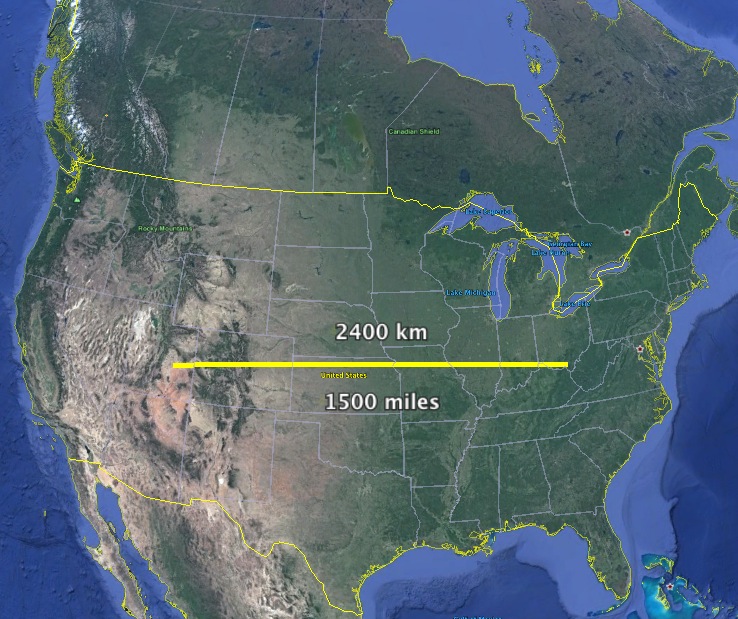
Food is so intertwined with travel that it's hard to think of one without the other. Even if we don't travel, our food does. It's been estimated that the ingredients in an average American meal have traveled 1500 miles from farm to plate (http://www.worldwatch.org/globetrotting-food-will-travel-farther-ever-thanksgiving). 

Average distance from farm to an American dinner plate


Fortunately, some of my favourite travel destinations are places that have excellent local food. In Italy, I can eat locally while enjoying some of the best food in the world. However, I still have some food-related challenges even when my destination has great local cuisine. My problem always seems to start within a day of departure regardless of whether I'm driving or flying and usually has to do with missing my homemade bread or cereal - things that can't be found away from home. Italy is famous for their food but not for their healthy or filling breakfasts. My solution is to travel with food and that's where this bread comes in.

If I have the time to plan ahead, one of my favourite travelling breads is a heavy, grainy, healthy loaf like this one. It's loaded with nuts, fruit, veggies and flavour. Much of its flavour and dark colour comes from ground cinnamon which you'll want to buy in bulk if possible. If this loaf is sliced and dried, it will keep for weeks. It's heavy enough to make a good breakfast and if thinly sliced and dried to a crisp, even satisfies the munchies.

I like making bread with a long, slow ferment but this recipe can be speeded up by starting with warm water and using up to a full packet of instant yeast.

With walnuts, raisins, apples, flax seed and carrots, this bread is almost a balanced meal. 

Two loaves or two large flats of fermented travelling bread

3 cups water
1.5 cups whole wheat flour
1.5 cups grated carrots, microwaved until steamed
1/2 cup raisins
1/2 cup flax seed
2 cups grated apples
2 cups chopped walnuts
1/3 cup cinnamon
1 tsp. salt
Unbleached flour as needed, approximately 6 cups

On the first day, add 1/4 teaspoon instant yeast and the whole wheat flour to cool water and mix. Cover and let sit overnight.

On day two, add all the other ingredients except the salt and unbleached flour. Cover and let sit overnight.

On day three, add the salt and start blending in the unbleached flour until the dough can be turned out. Keep dusting the outside of the dough and the work surface while kneading until most of the stickiness is gone. Cover and let sit at room temperature for about two hours. This dough will not double in bulk.


Divide dough in two. For loaves, roll them out into two log shapes, place them on a flour or cornmeal dusted sheet and bake at 500 F for 30 minutes or until interior reads about 85 C with an instant read thermometer. For flatbreads, roll one of them out to a little smaller size than your large cookie sheet, transfer it to the dusted sheet, and tease it out to full size. Optionally, brush top with yogurt or egg yolk and sprinkle with seeds (e.g. sesame, sunflower) and/or coarse salt. Bake at 500 F for 7-8 minutes or until it looks done.  Repeat with other half of dough.